


Hey there! As a supplier of wheeled dry powder fire extinguishers, I often get asked about how to adjust the spray pattern of these life - saving devices. It's a crucial skill, as the right spray pattern can make all the difference when it comes to putting out a fire effectively. In this blog, I'll walk you through the steps to adjust the spray pattern of a wheeled dry powder fire extinguisher, and also give you some tips on when to use different patterns.
First off, let's talk about why adjusting the spray pattern matters. Different fires require different approaches. For example, a large, spreading fire might need a wide - angle spray to cover more area quickly. On the other hand, a small, concentrated fire, like one in an electrical appliance, might need a narrow, focused spray to target the source directly.
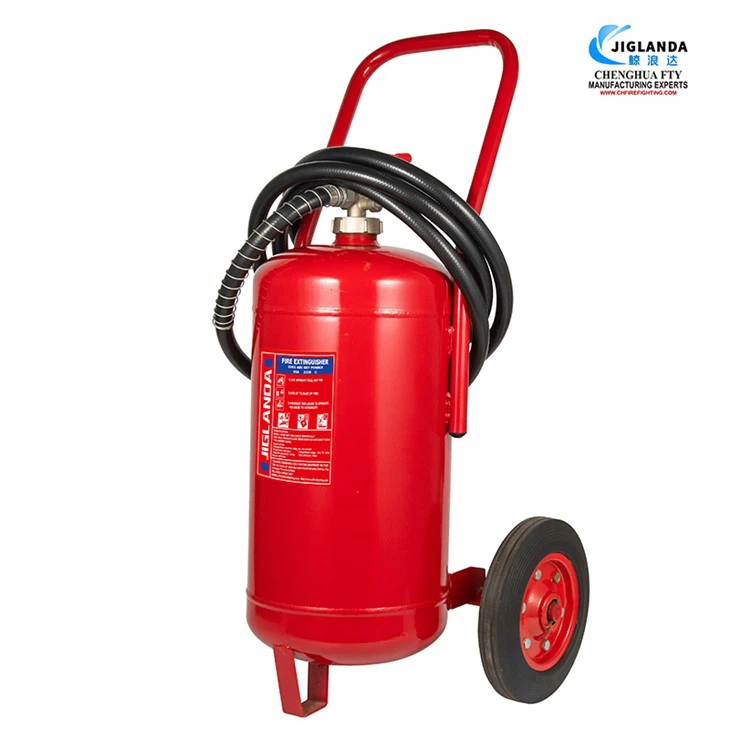
Our company offers a range of wheeled dry powder fire extinguishers, including the 50KG Wheeled Dry Powder Fire Extinguisher, the 25KG Wheeled Dry Powder Fire Extinguisher, and the 20KG Wheeled Dry Powder Fire Extinguisher. Each of these models comes with a nozzle that can be adjusted to change the spray pattern.
Now, let's get into the nitty - gritty of adjusting the spray pattern. Most wheeled dry powder fire extinguishers have a nozzle with an adjustable head. To start, make sure the extinguisher is in a safe and stable position. You don't want it tipping over while you're trying to adjust the nozzle.
The first step is to locate the adjustment mechanism on the nozzle. This is usually a rotating collar or a lever. If it's a rotating collar, you can turn it clockwise or counter - clockwise to change the spray pattern. Turning it one way will make the spray wider, while turning it the other way will make it more narrow.
If your extinguisher has a lever, moving the lever up or down will have a similar effect. Moving it in one direction will increase the spread of the dry powder, and moving it in the other will concentrate the spray.
Before you actually use the extinguisher in a real - life fire situation, it's a good idea to practice adjusting the spray pattern. You can do this in a safe, controlled environment. Just make sure you follow all the safety guidelines and regulations.
When you're adjusting the spray pattern, keep in mind the type of fire you're dealing with. For Class A fires (ordinary combustibles like wood, paper, and cloth), a wider spray pattern can be effective as these fires tend to spread over a larger area. You want to cover as much of the burning material as possible to smother the flames.
For Class B fires (flammable liquids like gasoline, oil, and grease), a more focused spray can be better. You want to target the base of the fire to cut off the fuel supply. Aim the nozzle at the edge of the fire and work your way towards the center.
Class C fires (electrical fires) require extra caution. Use a narrow spray to target the source of the fire without getting too close to the electrical equipment. Make sure the power is turned off if it's safe to do so.
Class D fires (combustible metals) are a bit more specialized. You'll need a fire extinguisher specifically designed for these types of fires, and the spray pattern adjustment will depend on the nature of the metal and the size of the fire.
Another thing to consider is the distance between the extinguisher and the fire. If you're too close, the force of the spray might scatter the burning material and make the fire worse. If you're too far away, the dry powder might not reach the fire effectively. A good rule of thumb is to start at a distance of about 6 - 8 feet and adjust as needed.
It's also important to maintain your wheeled dry powder fire extinguisher regularly. Check the nozzle for any blockages or damage. If there's something blocking the nozzle, it can affect the spray pattern and the performance of the extinguisher. Clean the nozzle periodically to ensure a smooth and consistent spray.

Now, let's talk about some common mistakes to avoid when adjusting the spray pattern. One mistake is not reading the user manual. Each extinguisher model might have slightly different instructions for adjusting the nozzle. Make sure you understand how your specific extinguisher works before you try to adjust it.
Another mistake is panicking in a fire situation. It's easy to get overwhelmed, but try to stay calm and think about the type of fire and the appropriate spray pattern. Rushing and using the wrong pattern can waste the dry powder and make the fire harder to control.
If you're new to using wheeled dry powder fire extinguishers, it might be a good idea to take a fire safety training course. These courses can teach you not only how to adjust the spray pattern but also how to use the extinguisher safely and effectively.
In conclusion, adjusting the spray pattern of a wheeled dry powder fire extinguisher is an important skill that can save lives and property. By understanding the different spray patterns and when to use them, you can be better prepared to handle a fire emergency.
If you're interested in purchasing a wheeled dry powder fire extinguisher or have any questions about our products, feel free to reach out to us. We're here to help you make the right choice for your fire safety needs.
References:
- National Fire Protection Association (NFPA) standards on fire extinguishers
- Manufacturer's user manuals for wheeled dry powder fire extinguishers


