


As a supplier of wheeled dry powder fire extinguishers, I understand the importance of ensuring that employees are well - trained to use these essential safety devices. In this blog, I will share some effective ways to train employees on how to use a wheeled dry powder fire extinguisher.
Understanding the Basics of Wheeled Dry Powder Fire Extinguishers
Before diving into the training process, it's crucial for employees to have a basic understanding of wheeled dry powder fire extinguishers. These fire extinguishers are designed to combat various types of fires, including Class A (ordinary combustibles like wood and paper), Class B (flammable liquids such as gasoline and oil), and Class C (energized electrical equipment).
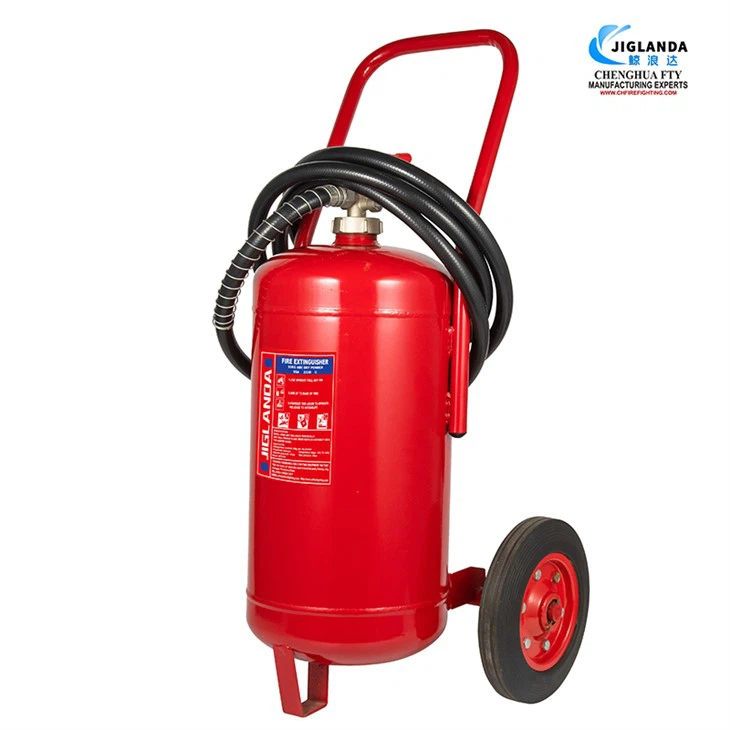
We offer different capacities of wheeled dry powder fire extinguishers to meet various needs. For instance, the 25KG Wheeled Dry Powder Fire Extinguisher is suitable for smaller areas or less severe fire risks. The 50KG Wheeled Dry Powder Fire Extinguisher provides a greater amount of extinguishing agent, which can be used in medium - sized industrial or commercial spaces. And for large - scale facilities, the 100KG Wheeled Dry Powder Fire Extinguisher is an ideal choice.
Pre - training Preparation
- Assess the Training Needs
- Evaluate the workplace environment, including the type of operations, the presence of flammable materials, and the layout of the building. This will help determine the appropriate level of training and the specific scenarios employees may encounter.
- Identify the number of employees who need training and their prior knowledge of fire safety. For example, new employees may require more in - depth training compared to those with some fire safety experience.
- Gather Training Materials
- Prepare visual aids such as posters, brochures, and videos that illustrate the proper use of wheeled dry powder fire extinguishers. These materials can be used during the training session to enhance understanding.
- Have a real wheeled dry powder fire extinguisher on hand for a hands - on demonstration. Make sure the extinguisher is in good working condition and has been recently inspected.
Training Sessions
- Theoretical Training
- Introduction to Fire Safety
- Start the training by explaining the basic principles of fire, including the fire triangle (fuel, oxygen, and heat). Teach employees how to prevent fires by eliminating or controlling these elements in the workplace.
- Discuss the different classes of fires and why wheeled dry powder fire extinguishers are suitable for certain types of fires.
- Components of a Wheeled Dry Powder Fire Extinguisher
- Show employees the various parts of the extinguisher, such as the wheeled base, the cylinder, the hose, the nozzle, and the pressure gauge. Explain the function of each component and how they work together to extinguish a fire.
- Demonstrate how to check the pressure gauge to ensure the extinguisher is fully charged and ready for use.
- Safety Precautions
- Emphasize the importance of personal safety when using a fire extinguisher. Teach employees to wear appropriate protective gear, such as gloves and safety glasses.
- Explain the risks associated with using a fire extinguisher, such as the potential for electrical shock if used on an energized electrical fire, and how to avoid these risks.
- Introduction to Fire Safety
- Practical Training
- Hands - on Demonstration
- Perform a live demonstration of how to use a wheeled dry powder fire extinguisher. Start by showing employees how to move the extinguisher to the fire scene using the wheels.
- Demonstrate the PASS method: Pull the pin, Aim at the base of the fire, Squeeze the handle, and Sweep from side to side. Explain that aiming at the base of the fire is crucial because this is where the fuel is located.
- Practice Sessions
- Divide employees into small groups and provide each group with a wheeled dry powder fire extinguisher. Have them practice moving the extinguisher, pulling the pin, aiming, squeezing, and sweeping under supervision.
- Set up simulated fire scenarios using fire training props, such as small pans with burning oil or paper. This will allow employees to experience using the extinguisher in a realistic environment.
- Feedback and Correction
- Observe employees during the practice sessions and provide immediate feedback. Correct any incorrect techniques or actions and reinforce the proper procedures.
- Encourage employees to ask questions and clarify any doubts they may have during the training.
- Hands - on Demonstration
Post - training Follow - up
- Refresher Training
- Schedule regular refresher training sessions to ensure that employees retain their knowledge and skills. These sessions can be conducted annually or bi - annually, depending on the workplace requirements.
- Use the refresher training as an opportunity to update employees on any new safety regulations or best practices related to fire extinguisher use.
- Inspection and Maintenance
- Teach employees how to perform basic inspections of wheeled dry powder fire extinguishers on a regular basis. This includes checking the pressure gauge, looking for signs of damage or leakage, and ensuring that the hose and nozzle are in good condition.
- Encourage employees to report any issues with the fire extinguishers immediately so that they can be repaired or replaced in a timely manner.
Conclusion
Training employees to use wheeled dry powder fire extinguishers is an essential part of workplace safety. By providing comprehensive theoretical and practical training, followed by regular follow - up, employees will be better prepared to respond to fire emergencies effectively.
If you are interested in purchasing our high - quality wheeled dry powder fire extinguishers or need more information about fire safety training, please feel free to contact us for procurement discussions. We are committed to providing you with the best products and services to ensure the safety of your workplace.

References
- NFPA 10: Standard for Portable Fire Extinguishers. National Fire Protection Association.
- OSHA Fire Safety Standards. Occupational Safety and Health Administration.


