


As a supplier of wheeled dry powder fire extinguishers, I understand the critical importance of proper storage to ensure these life - saving devices remain effective when needed. In this blog, I'll delve into the fire - protection requirements for storing wheeled dry powder fire extinguishers, which is essential knowledge for both businesses and individuals.
Temperature and Humidity Control
One of the primary factors in storing wheeled dry powder fire extinguishers is maintaining the right temperature and humidity. The ideal temperature range for storage is typically between - 20°C to 55°C. Extreme cold can cause the powder to become compacted, making it difficult to discharge properly when activated. On the other hand, high temperatures can lead to a loss of pressure in the extinguisher, rendering it ineffective.
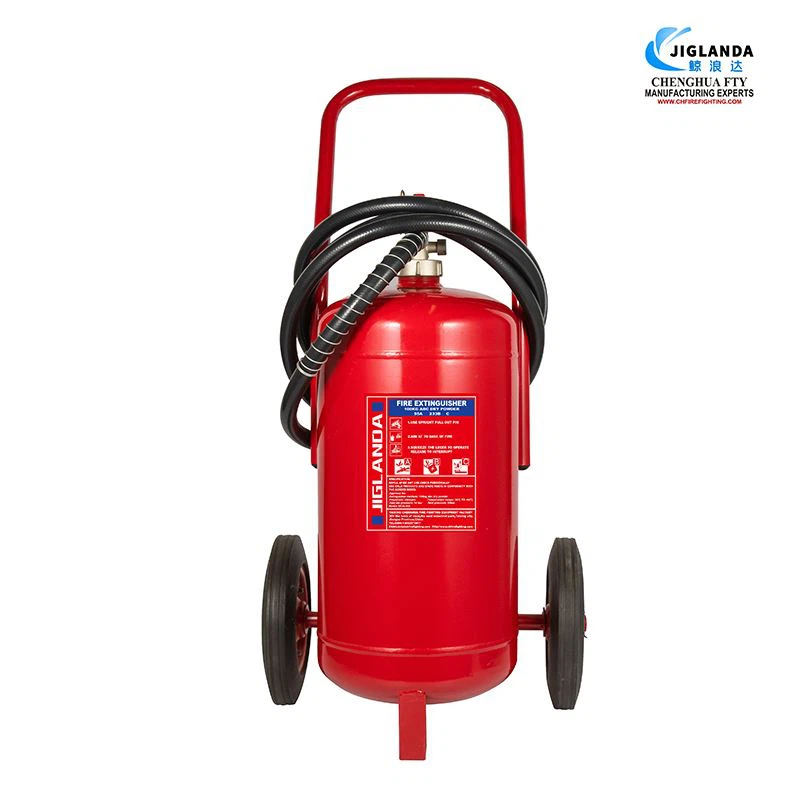

Humidity also plays a vital role. Excessive humidity can cause the dry powder to clump together. When this happens, the powder won't flow smoothly through the nozzle during an emergency, reducing the extinguisher's ability to suppress fires. It is recommended to store wheeled dry powder fire extinguishers in a dry environment with a relative humidity below 70%. For instance, in industrial settings where there might be a lot of moisture in the air, using dehumidifiers can be a practical solution to keep the storage area dry.
Location and Accessibility
The location where wheeled dry powder fire extinguishers are stored is crucial. They should be placed in easily accessible areas. In commercial buildings, this often means near exits, stairwells, or in areas where fires are more likely to occur, such as kitchens or boiler rooms. The storage area should be clearly marked, so that in an emergency, people can quickly locate the extinguisher.
It's also important to ensure that the path to the extinguisher is unobstructed. There should be no boxes, equipment, or other obstacles blocking the way. This is especially important in warehouses or factories where large amounts of inventory are stored. Regular inspections should be carried out to make sure that the storage area remains clear.
Mounting and Securing
Wheeled dry powder fire extinguishers are heavy and can be easily knocked over if not properly secured. They should be mounted on a stable stand or in a specially designed storage cabinet. The stand or cabinet should be able to support the weight of the extinguisher and prevent it from tipping over.
If the extinguisher is stored in a cabinet, the cabinet should be made of non - combustible materials. It should also have a clear door or cover, so that the extinguisher can be easily seen and accessed. Additionally, the cabinet should be locked to prevent unauthorized use, but the key should be readily available in case of an emergency.
Separation from Flammable Materials
When storing wheeled dry powder fire extinguishers, they should be kept away from flammable materials. This includes gasoline, oil, paint, and other combustible substances. A general rule of thumb is to maintain a separation distance of at least 1 meter between the fire extinguisher and any flammable materials.
In industrial settings, where large quantities of flammable materials are stored, it might be necessary to have a dedicated storage area for fire extinguishers. This area should be separated from the flammable storage area by a fire - resistant barrier, such as a concrete wall.
Regular Inspections and Maintenance
Regular inspections are essential to ensure that wheeled dry powder fire extinguishers are in good working condition. Inspections should be carried out at least once a month. During the inspection, check the pressure gauge to make sure that the pressure is within the recommended range. A low pressure reading could indicate a leak or other problem with the extinguisher.
Also, examine the hose and nozzle for any signs of damage, such as cracks or holes. The wheels should be checked to ensure that they are in good working order and can roll freely. If any issues are found during the inspection, the extinguisher should be repaired or replaced immediately.
In addition to monthly inspections, a more comprehensive maintenance check should be carried out annually by a qualified technician. This includes a thorough examination of the internal components of the extinguisher, as well as a hydrostatic test to check the integrity of the pressure vessel.
Compatibility with Other Fire - Fighting Equipment
When storing wheeled dry powder fire extinguishers, it's important to consider their compatibility with other fire - fighting equipment in the area. For example, if there are also water - based fire extinguishers in the same storage area, they should be separated. Mixing different types of fire extinguishers can lead to cross - contamination, which can reduce the effectiveness of both types of extinguishers.
Our Product Offerings
At our company, we offer a range of high - quality wheeled dry powder fire extinguishers, including the 100KG Wheeled Dry Powder Fire Extinguisher, 25KG Wheeled Dry Powder Fire Extinguisher, and 20KG Wheeled Dry Powder Fire Extinguisher. These extinguishers are designed to meet the highest safety standards and are suitable for a variety of applications, from small businesses to large industrial facilities.
Contact Us for Procurement
If you're interested in purchasing wheeled dry powder fire extinguishers or have any questions about their storage and use, we're here to help. Our team of experts can provide you with detailed information and guidance to ensure that you make the right choice for your fire - protection needs. Don't hesitate to reach out to us for procurement and further discussions.
References
- National Fire Protection Association (NFPA). NFPA 10: Standard for Portable Fire Extinguishers.
- International Organization for Standardization (ISO). ISO 7165: Fire extinguishers - Requirements and test methods.


