


As a supplier of wheeled dry powder fire extinguishers, I've witnessed firsthand the importance of understanding how environmental factors, particularly wind, can influence the effectiveness of these life - saving devices. In this blog, I'll delve into the various ways wind can impact the use of wheeled dry powder fire extinguishers and provide insights to help users make the most of these tools in different wind conditions.
1. How Wind Affects the Dispersion of Dry Powder
The primary function of a wheeled dry powder fire extinguisher is to disperse a fine powder over the fire, smothering the flames and interrupting the chemical reaction of combustion. Wind can significantly alter the dispersion pattern of this dry powder.
When there is a light breeze, the powder may be gently carried towards the fire, potentially increasing the coverage area. However, if the wind is too strong, it can blow the powder away from the intended target. For instance, in a windy outdoor environment, a gusty wind can cause the dry powder to be scattered in the air, failing to reach the base of the fire where it is most needed. This not only reduces the effectiveness of the fire - fighting effort but also wastes the valuable dry powder inside the extinguisher.
2. Impact on the Range of the Fire Extinguisher
Wheeled dry powder fire extinguishers are designed to have a certain discharge range. Wind can either extend or reduce this range. In a head - on wind (wind blowing against the direction of powder discharge), the effective range of the extinguisher can be severely limited. The force of the wind acts against the momentum of the expelled powder, causing it to fall short of the target.
Conversely, a tailwind (wind blowing in the same direction as the powder discharge) can increase the range of the extinguisher. But this also comes with a risk. The increased range might lead to an over - estimation of the distance at which the powder can effectively extinguish the fire. The powder may be carried too far, and if it is not properly directed at the base of the fire, it will not be able to suppress the flames.
3. Influence on Fire Behavior and Fire - Fighting Strategy
Wind is not only a factor that affects the extinguisher but also plays a crucial role in fire behavior. A strong wind can fan the flames, making the fire spread more rapidly and increasing its intensity. In such a situation, using a wheeled dry powder fire extinguisher becomes more challenging.
Fire - fighters need to adjust their strategy according to the wind direction and speed. For example, if the wind is blowing the fire towards a particular area, they should position themselves upwind of the fire and use the extinguisher to create a barrier of dry powder to prevent the fire from spreading further. This requires a good understanding of both the wind conditions and the capabilities of the wheeled dry powder fire extinguisher.
4. Wind and the Stability of the Wheeled Fire Extinguisher
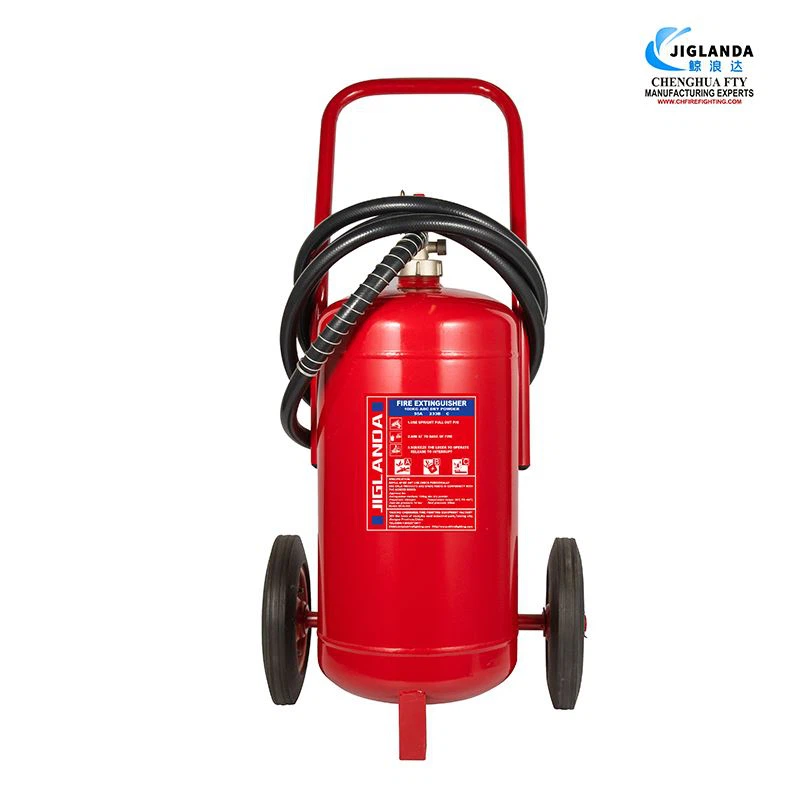
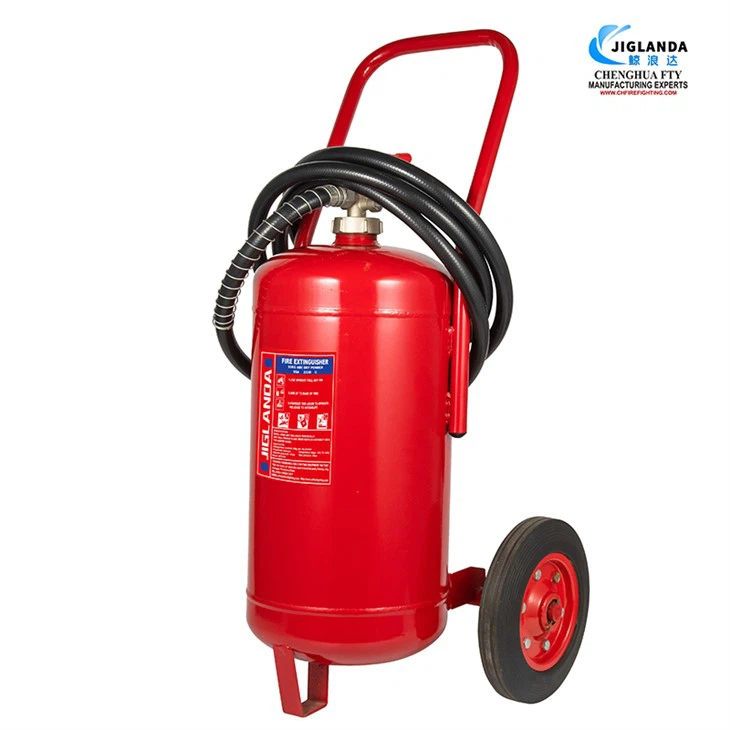
Another aspect to consider is the physical stability of the wheeled dry powder fire extinguisher itself. Strong winds can make it difficult to maneuver the extinguisher. The force of the wind can push the heavy extinguisher around, especially on uneven or slippery surfaces. This can pose a safety risk to the user, who may struggle to keep the extinguisher in place during the fire - fighting process.
To address this issue, some wheeled fire extinguishers are designed with wider bases and better - locking wheels to enhance stability. However, in extremely windy conditions, additional measures may be needed, such as using weights or ropes to secure the extinguisher.
5. Choosing the Right Wheeled Dry Powder Fire Extinguisher for Windy Conditions
When it comes to windy environments, the choice of wheeled dry powder fire extinguisher matters. Different models have different capabilities in dealing with wind.
For smaller fires in moderately windy conditions, a 20KG Wheeled Dry Powder Fire Extinguisher may be sufficient. It is relatively easy to maneuver and can provide a good amount of dry powder for short - range fire - fighting.
For larger fires or in areas with stronger winds, a 50KG Wheeled Dry Powder Fire Extinguisher or a 100KG Wheeled Dry Powder Fire Extinguisher may be more appropriate. These larger models can hold more dry powder and have a more powerful discharge, which can better withstand the effects of wind.
6. Training and Preparedness for Windy Fire - Fighting
Proper training is essential for using wheeled dry powder fire extinguishers effectively in windy conditions. Fire - fighters and users should be educated on how to assess wind conditions, adjust their fire - fighting techniques accordingly, and choose the right extinguisher for the situation.
Training programs should include practical exercises in different wind scenarios, allowing users to gain hands - on experience in dealing with the challenges posed by wind. This will not only improve their ability to extinguish fires but also enhance their safety during the fire - fighting process.
7. Conclusion and Call to Action
In conclusion, wind has a significant influence on the use of wheeled dry powder fire extinguishers. Understanding these effects is crucial for effective fire - fighting in various environments. Whether you are a professional fire - fighter or a facility manager responsible for fire safety, choosing the right wheeled dry powder fire extinguisher and being prepared to deal with windy conditions can make a difference in saving lives and property.
If you are in need of high - quality wheeled dry powder fire extinguishers, we are here to help. Our range of products is designed to meet the diverse needs of different users, especially in challenging wind conditions. Contact us today to discuss your requirements and start a procurement negotiation. We are committed to providing you with the best fire - fighting solutions.
References
- National Fire Protection Association (NFPA) standards on fire - fighting equipment and wind - related fire safety.
- Research papers on the impact of environmental factors on fire - extinguisher performance.


