


As a trusted supplier of wheeled dry powder fire extinguishers, I often encounter inquiries about the proper storage conditions for these essential safety devices. Ensuring that wheeled dry powder fire extinguishers are stored correctly is crucial for maintaining their effectiveness and reliability in the event of a fire. In this blog post, I will delve into the key factors to consider when storing wheeled dry powder fire extinguishers, drawing on my experience in the industry.
Temperature
One of the most critical aspects of storing wheeled dry powder fire extinguishers is controlling the temperature. Extreme temperatures can have a detrimental impact on the performance of these fire extinguishers.
High temperatures can cause the pressure inside the fire extinguisher to increase, potentially leading to leaks or even rupture. Additionally, excessive heat can cause the dry powder to clump together, reducing its ability to flow freely when discharged. This can significantly impair the fire - fighting capabilities of the extinguisher.
On the other hand, low temperatures can make the dry powder more viscous, also hindering its flow. In freezing conditions, the pressure inside the extinguisher may drop, making it difficult to expel the powder effectively.
The ideal temperature range for storing wheeled dry powder fire extinguishers is typically between -20°C to 55°C (-4°F to 131°F). It is essential to store these fire extinguishers in an environment where the temperature remains within this range as much as possible. For example, in industrial settings, fire extinguishers should be stored in climate - controlled storage rooms or areas that are protected from direct sunlight and extreme weather conditions.
Humidity
Humidity is another important factor to consider when storing wheeled dry powder fire extinguishers. High humidity levels can cause the dry powder to absorb moisture, leading to clumping and corrosion of the internal components of the fire extinguisher.
When the dry powder clumps, it cannot be discharged evenly, which can reduce the effectiveness of the fire extinguisher. Corrosion of the internal components, such as the valve and the cylinder, can also compromise the structural integrity of the fire extinguisher, increasing the risk of leaks or malfunctions.
To prevent these issues, it is recommended to store wheeled dry powder fire extinguishers in a dry environment with a relative humidity of less than 75%. If the storage area is prone to high humidity, dehumidifiers can be used to maintain the appropriate humidity levels.
Ventilation
Proper ventilation is necessary when storing wheeled dry powder fire extinguishers. Good ventilation helps to prevent the accumulation of fumes or gases that may be released from the fire extinguisher over time. Although dry powder fire extinguishers are generally stable, small amounts of gases can be released due to chemical reactions or minor leaks.
Inadequate ventilation can lead to the build - up of these gases, which can be harmful to human health if inhaled. Moreover, a poorly ventilated storage area can also contribute to higher humidity levels, which, as mentioned earlier, can have a negative impact on the fire extinguisher.
The storage area should have sufficient air circulation. This can be achieved by installing vents or fans to ensure that fresh air is constantly flowing through the space.
Location
The location where wheeled dry powder fire extinguishers are stored is also of great importance. They should be stored in a readily accessible location so that they can be quickly retrieved in case of a fire. The storage area should be clearly marked, and the fire extinguishers should be visible and unobstructed.
Avoid storing fire extinguishers in areas where they may be damaged, such as near heavy machinery, in high - traffic areas, or in places where they can be knocked over. Additionally, fire extinguishers should not be stored in areas where they are exposed to physical impacts or vibrations, as this can damage the internal components and affect their performance.
It is also important to store fire extinguishers away from sources of heat, such as boilers, furnaces, or direct sunlight. These heat sources can cause the temperature inside the fire extinguisher to rise, as discussed earlier.
Mounting and Positioning
Wheeled dry powder fire extinguishers should be properly mounted or positioned in the storage area. They should be stored in an upright position to ensure that the pressure is evenly distributed and that the dry powder remains in a free - flowing state.
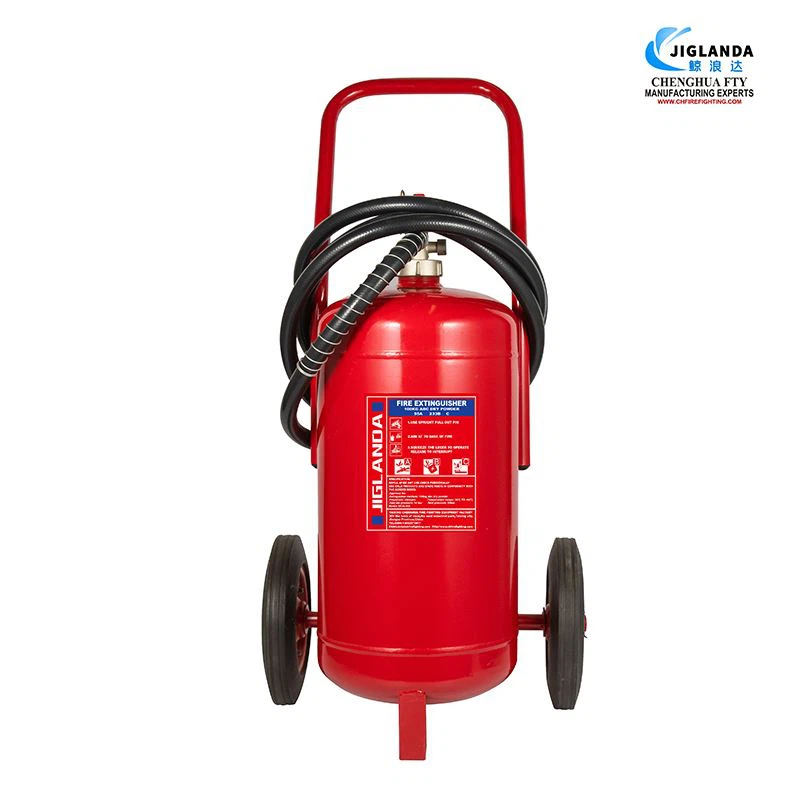

If the fire extinguisher is stored on its side or at an angle for an extended period, the dry powder may settle unevenly, which can affect its discharge. Some fire extinguishers come with specific mounting brackets or stands that should be used to keep them in the correct position.
Compatibility with Other Substances
When storing wheeled dry powder fire extinguishers, it is important to consider their compatibility with other substances in the storage area. Do not store fire extinguishers near flammable or combustible materials, as this can pose a significant safety risk.
In addition, avoid storing fire extinguishers near chemicals or substances that may react with the dry powder or the materials of the fire extinguisher. For example, some chemicals may corrode the cylinder or the valve of the fire extinguisher, leading to malfunctions.
Inspection and Maintenance
Regular inspection and maintenance are essential for ensuring that wheeled dry powder fire extinguishers are in good working condition. Even when stored under the best conditions, fire extinguishers should be inspected periodically to check for signs of damage, leaks, or corrosion.
The pressure gauge should be checked to ensure that the pressure is within the recommended range. The dry powder should be visually inspected for clumping, and the external components, such as the hose and the nozzle, should be checked for any signs of wear or damage.
In addition to regular inspections, wheeled dry powder fire extinguishers should be serviced at least once a year by a qualified technician. This includes a thorough internal inspection, pressure testing, and replacement of any worn - out components.
Our Product Range
At our company, we offer a wide range of wheeled dry powder fire extinguishers to meet different needs. Our 20KG Wheeled Dry Powder Fire Extinguisher is suitable for small to medium - sized fires in commercial and industrial settings. It is easy to maneuver and provides an effective solution for combating Class A, B, and C fires.
For larger fires, we have the 100KG Wheeled Dry Powder Fire Extinguisher. This heavy - duty fire extinguisher is designed for large industrial facilities, warehouses, and other high - risk areas. It has a long discharge time and can cover a large area, making it ideal for suppressing major fires.
We also offer the 25KG Wheeled Dry Powder Fire Extinguisher, which is a popular choice for medium - sized businesses and institutions. It provides a good balance between portability and fire - fighting capacity.
Conclusion
Proper storage of wheeled dry powder fire extinguishers is essential for maintaining their performance and reliability. By considering factors such as temperature, humidity, ventilation, location, mounting, and compatibility with other substances, you can ensure that your fire extinguishers are ready to use when needed.
If you are interested in purchasing high - quality wheeled dry powder fire extinguishers or have any questions about their storage and maintenance, please feel free to contact us. We are committed to providing you with the best fire - safety solutions and excellent customer service.
References
- National Fire Protection Association (NFPA) standards on fire extinguisher storage and maintenance.
- Manufacturer's guidelines for wheeled dry powder fire extinguishers.


