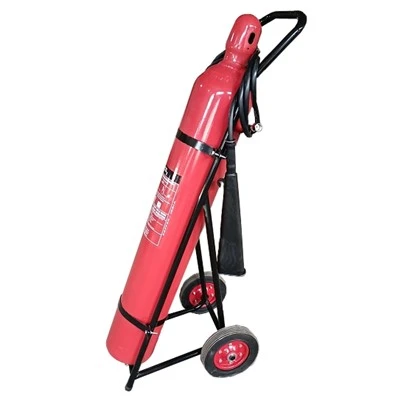
In the field of fire safety, foam fire extinguishers and water fire extinguishers are two common fire extinguishing equipment, widely used in various places. They are simple to operate and have high fire extinguishing efficiency, but if they lack daily maintenance, they may fail at critical moments. Understanding and mastering the correct daily care methods are crucial to ensuring the reliability and service life of fire extinguishers.
Foam fire extinguishers mainly cover the surface of the burning object with foam to isolate oxygen to achieve the fire extinguishing effect. They are suitable for fires such as oils and flammable liquids. Water fire extinguishers rely on the cooling effect of water to extinguish fires of solid materials, such as wood and paper. Although the two have different functions, the core principles of daily care are similar.
First of all, regular inspection of the appearance and pressure of the fire extinguisher is basic work. Fire extinguishers should be stored in a dry and ventilated environment, away from direct sunlight or extreme temperatures. The fire extinguisher bottle should be visually inspected every month for signs of rust, deformation or leakage, especially whether the pressure gauge pointer is in the green normal area. If insufficient pressure or damage to the bottle is found, contact a professional immediately for repair or replacement.
Secondly, the sealing and accessory integrity of the fire extinguisher need to be paid special attention. Check whether the nozzle, safety pin and nozzle are intact to ensure that there is no blockage or looseness. The nozzle of the foam fire extinguisher may accumulate dirt due to long-term storage and needs to be cleaned regularly to prevent blockage; the nozzle of the water fire extinguisher needs to pay attention to winter antifreeze measures to avoid low temperature causing water pipe rupture.
In addition, the regular filling and functional testing of the fire extinguisher cannot be ignored. Even if it has not been used, it is usually recommended to replace the agent and pressure test every 2-3 years for foam fire extinguishers, and the filling cycle of water fire extinguishers needs to be determined according to the frequency of use and environmental conditions. Some countries or regions require a comprehensive inspection by a professional organization every year to ensure that the fire extinguisher meets safety standards.
Finally, employee training is equally important. Regularly organize fire extinguisher use drills to ensure that relevant personnel are familiar with the operating procedures and can respond quickly in emergencies. Only by combining correct daily care with standardized use management can the effectiveness of fire extinguishers be maximized and a solid guarantee for site safety can be provided.