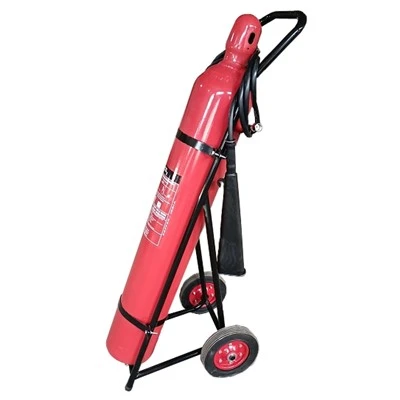
As one of the most common fire-fighting equipment, dry powder fire extinguishers are widely used in homes, industries and commercial places around the world. However, different types of dry powder fire extinguishers have significant differences in composition, applicable fire types and usage scenarios. Understanding these differences will help users choose the right product according to actual needs to ensure fire safety.
Classification of dry powder fire extinguishers
Dry powder fire extinguishers are mainly divided into two categories: ordinary dry powder fire extinguishers (ABC) and special dry powder fire extinguishers (BC or D).
ABC dry powder fire extinguishers are the most common type and are suitable for extinguishing Class A (solid combustibles), Class B (liquid combustibles) and Class C (gas combustibles) fires. Its fire extinguishing agent is usually ammonium phosphate-based dry powder, which has a wide range of applicability and is suitable for use in homes, offices, shopping malls and other places.
BC dry powder fire extinguishers are specifically used to extinguish Class B and Class C fires, and their fire extinguishing agents are mostly sodium bicarbonate-based dry powder. This type of fire extinguisher is not suitable for solid fires and is commonly found in flammable liquid and gas storage areas such as gas stations and chemical plants.
Class D dry powder fire extinguishers are special fire extinguishers designed for metal fires (such as active metals such as magnesium, sodium, and potassium). The composition of its fire extinguishing agent varies depending on the type of metal, and is usually a special dry powder such as sodium chloride or graphite-based powder. This type of fire extinguisher is mainly used in industrial fields such as metal processing and smelting.
Fire extinguishing agent composition and fire extinguishing principle
Different types of dry powder fire extinguishers use different fire extinguishing agent compositions, which directly affect their fire extinguishing effects. The ammonium phosphate-based dry powder of the ABC dry powder fire extinguisher extinguishes fires through the dual effects of chemical inhibition and physical coverage, which can not only interrupt the combustion chain reaction, but also isolate oxygen. The sodium bicarbonate-based dry powder of the BC dry powder fire extinguisher mainly extinguishes fires through chemical inhibition, and is suitable for liquid and gas fires. The special powder of the Class D dry powder fire extinguisher targets the high temperature characteristics of metal fires and extinguishes fires by absorbing heat and isolating oxygen.
Application scenario selection
When choosing a dry powder fire extinguisher, you need to match it according to the fire risk type of the place. Class ABC dry powder fire extinguishers are recommended for homes and offices because of their wide coverage. Industrial places such as gas stations and chemical plants are more suitable for class BC dry powder fire extinguishers. Metal processing companies must be equipped with class D dry powder fire extinguishers to ensure effective control of metal fires.
Understanding the classification and applicable scenarios of dry powder fire extinguishers will help improve fire safety levels and reduce fire risks. Correct selection and use of fire extinguishers is the key to ensuring the safety of personnel and property.