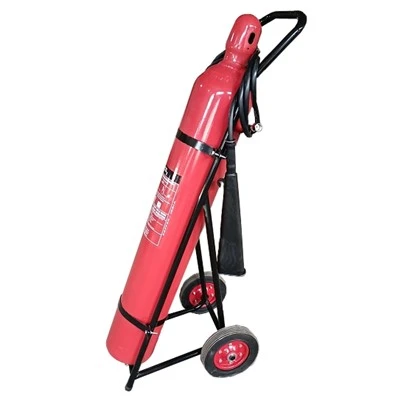
In modern industrial and commercial environments, the risk of fire always exists. Whether it is a production workshop, storage facility or office space, it is crucial to choose the right fire extinguishing equipment. Foam fire extinguishers and water fire extinguishers, as two basic but efficient firefighting tools, play an irreplaceable role in preventing and controlling fires. Understanding their characteristics and applicable scenarios will help improve the overall fire safety level.
Foam fire extinguishers have become the first choice for extinguishing oil and flammable liquid fires with their unique fire extinguishing mechanism. This type of fire extinguisher quickly suppresses the spread of fire by spraying foam to cover the burning surface, isolate oxygen and cool the fire source. Its advantage lies in its efficient suppression ability for flammable liquids such as grease and gasoline, while the foam layer can also prevent re-ignition. In industries such as petrochemicals, food processing or transportation, the deployment of foam fire extinguishers significantly reduces the possibility of major fires.
In contrast, water fire extinguishers are more suitable for early fires of solid materials. It uses the high specific heat capacity and vaporization heat absorption characteristics of water to directly reduce the temperature of the burning material to below the ignition point. For fires caused by common combustibles such as wood, paper, and textiles, water fire extinguishers can quickly control the situation. It is worth noting that such equipment is strictly prohibited for use on live equipment or oil fires - incorrect use is not only ineffective, but may also increase the danger. Therefore, clearly distinguishing the types of fire extinguishers and their scope of application is the core of safe operation.
From a maintenance perspective, regular inspections of fire extinguisher pressure values, nozzle integrity, and agent expiration dates are also critical. Many fire accidents are caused by aging equipment or negligent maintenance, and a standardized inspection system can eliminate hidden dangers before they happen. In addition, employee training cannot be ignored. Only by ensuring that all users master the correct operating methods can a rapid response be achieved in an emergency.
Against the backdrop of increasingly stringent global fire safety standards, the rational allocation of foam and water fire extinguishers has become a manifestation of corporate social responsibility. Although these two classic fire-fighting tools have undergone technological iterations, their reliability and economy still make them a basic part of the fire protection system. Investing in scientific fire-fighting solutions is essentially a double guarantee for personnel safety and continued operation.