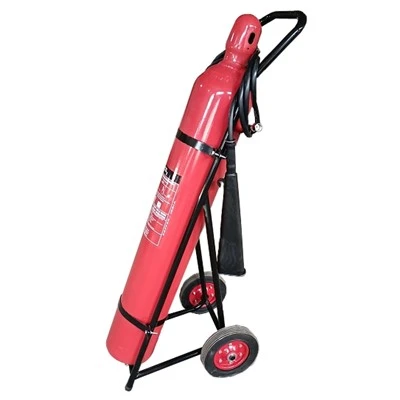
In the modern fire equipment management system, carbon dioxide fire extinguishers are widely used in various places because of their high efficiency and environmental protection. However, many users often overlook the importance of regular maintenance. In fact, the maintenance of carbon dioxide fire extinguishers is not only related to equipment performance, but also a key link in ensuring fire safety.
Carbon dioxide fire extinguishers mainly extinguish fires by releasing high-pressure liquid carbon dioxide, and their internal pressure can reach hundreds of atmospheres. Long-term use or improper storage may cause problems such as valve aging, pressure leakage or nozzle blockage. If not repaired in time, it may not start normally when a fire occurs, causing serious consequences. Therefore, regular maintenance is a necessary measure to ensure its reliability.
The maintenance process usually includes steps such as appearance inspection, pressure testing, valve inspection and internal cleaning. First, the technician will check whether the fire extinguisher casing is corroded or deformed, and confirm whether the pressure gauge reading is normal. If insufficient pressure or leakage is found, refilling or replacement of seals is required. In addition, as a core component, the valve needs to be disassembled, cleaned and the worn gasket replaced to ensure flexible switching and good sealing.
It is worth noting that the maintenance of carbon dioxide fire extinguishers must be operated by professional organizations. Non-professionals may cause equipment damage or safety hazards due to improper operation. For example, incorrect filling pressure may cause explosion risks, while residual grease or contaminants may affect the fire extinguishing effect. Therefore, it is crucial to choose a compliant maintenance service provider.
In the international market, the maintenance standards of carbon dioxide fire extinguishers usually follow ISO or local fire regulations. Some countries require a comprehensive inspection every 12 months, and frequently used equipment requires a shorter maintenance cycle. If foreign trade companies export related products, they must ensure that they meet the certification requirements of the target market, such as the EU's CE mark or the US UL certification.
With the improvement of fire safety awareness, the maintenance market for carbon dioxide fire extinguishers is gradually being standardized. In the future, the application of intelligent detection technology may further simplify the maintenance process, but the experience and standardized operation of professionals are still irreplaceable. For users, establishing a regular maintenance plan can not only extend the life of the equipment, but also be an important investment in the safety of life and property.