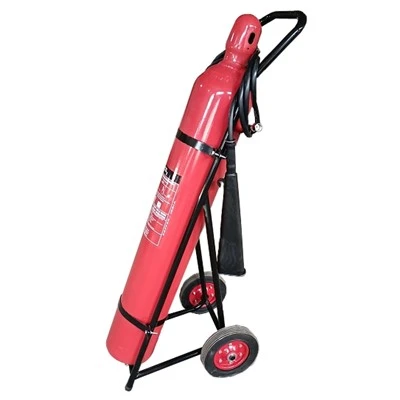
In the field of modern fire safety, stainless steel fire extinguishers have become an important choice in industrial, commercial and home scenes because of their corrosion resistance, high temperature resistance and long life. Correctly mastering its operation method can not only improve the efficiency of fire extinguishing, but also ensure the safety of users. The following is a detailed guide to use.
1. Inspection before use
Before using a stainless steel fire extinguisher, a basic inspection is required:
Pressure gauge status: Confirm that the pressure pointer is in the green area (normal range). If it points to red, it may be insufficient pressure. If it points to yellow, it may be overpressure. You need to contact a professional for processing.
Appearance integrity: Check whether the bottle body is rusted, deformed or damaged, whether the nozzle is blocked, and whether the safety pin is intact.
Applicability: Select the corresponding fire extinguishing agent (such as dry powder, carbon dioxide or water-based) according to the type of fire source. Stainless steel fire extinguishers are commonly used in dry powder or carbon dioxide types.
2. Operation steps
Remove the safety pin: Hold the handle of the fire extinguisher and use your other hand to remove the safety pin (some models need to be rotated or pressed to unlock).
Keep a safe distance: Stand upwind from the fire source, keep a distance of 2-3 meters from the flame to avoid smoke or high temperature injuries.
Aim at the root of the fire source: Aim the nozzle at the bottom of the flame (where the flame burns most violently), not the top of the flame.
Press the handle to spray: Press the handle evenly and forcefully to keep the fire extinguishing agent covering the fire source. Dry powder fire extinguishers need to sweep left and right, and carbon dioxide fire extinguishers need to continue spraying until the flame is extinguished.
Observe the risk of re-ignition: After extinguishing the fire, you still need to observe the scene to prevent the embers from re-igniting.
3. Precautions
Avoid operating against the wind: Against the wind may cause the fire extinguishing agent to be blown away, reducing the effect.
Prevent frostbite: Carbon dioxide fire extinguishers will generate low temperatures when spraying, so avoid direct contact with the nozzle.
Regular maintenance: Even if not in use, the pressure and internal status must be tested by a professional organization every year.
Stainless steel fire extinguishers are ideal for high-risk environments due to their durability and reliability. Mastering the correct operating method can minimize losses in an emergency. It is recommended that users conduct simulation drills based on actual scenarios to ensure that they are proficient in responding to sudden fires.