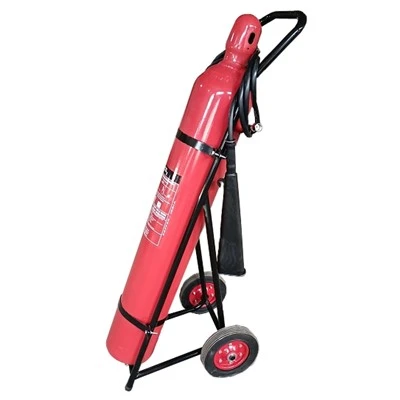
With the increasingly stringent global fire safety standards, EN3 fire extinguishers, as an important specification formulated by the European Organization for Standardization (CEN), have become widely recognized fire extinguisher production and construction standards in the international market. Understanding the construction standards of EN3 fire extinguishers will not only help improve product quality, but also ensure compliance with international trade requirements and lay the foundation for the expansion of foreign trade business.
The EN3 fire extinguisher standard mainly targets the design, manufacturing and testing requirements of portable fire extinguishers, covering the entire process from material selection to performance verification. First of all, in terms of materials, the EN3 standard stipulates that the outer shell of the fire extinguisher must be made of corrosion-resistant and high-temperature resistant materials to ensure that the structural integrity can be maintained under extreme conditions. At the same time, the manufacture of internal pressure vessels must comply with the relevant standards of high-pressure vessels to prevent safety hazards caused by excessive pressure.
In terms of manufacturing technology, the EN3 standard imposes strict requirements on welding, assembly and other links. Welding must be performed by certified welders, and non-destructive testing (such as X-ray or ultrasonic testing) must be used to ensure the quality of the weld. During the assembly process, the valve, nozzle and other key components of the fire extinguisher must be accurately installed to ensure that the fire extinguishing agent can be sprayed efficiently. In addition, the handle, pressure gauge and other accessories of the fire extinguisher must also be ergonomically designed for easy operation.
Performance testing is the core link of the EN3 standard. Fire extinguishers must pass a series of rigorous tests, including pressure testing, spray performance testing, drop testing and environmental adaptability testing. For example, the pressure test requires the fire extinguisher to remain at 1.5 times the working pressure for 5 minutes without leakage or deformation; the spray performance test verifies whether the fire extinguishing agent can cover the target area within the specified time; the drop test simulates unexpected situations during transportation to ensure that the fire extinguisher can still be used normally after falling from a height of 1 meter.
For foreign trade companies, following the EN3 standard is not only a guarantee of product quality, but also a pass to enter the European market. Many international buyers use EN3 certification as an important basis for supplier screening. Therefore, companies need to strictly benchmark EN3 standards in production and testing to ensure that products meet international market needs.
In short, the EN3 fire extinguisher construction standard is an important technical specification to ensure fire safety. Foreign trade enterprises should have a deep understanding of their requirements, optimize production processes, and improve product quality in order to enhance their international competitiveness and win more overseas orders.