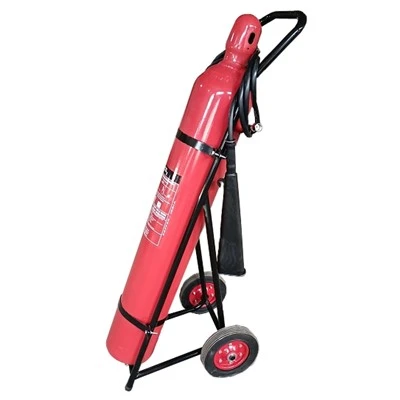
In the field of modern fire fighting equipment, stainless steel fire extinguishers have gradually become an important choice for industrial, commercial and household fire fighting due to their corrosion resistance and durability. This article will comprehensively analyze the technical points of stainless steel fire extinguishers from the aspects of working principle, structural characteristics and application scenarios.
The working principle of stainless steel fire extinguishers is similar to that of other types of fire extinguishers. It mainly sprays the fire extinguishing agent stored inside to the fire source under pressure to achieve the purpose of suppressing or extinguishing the flame. The core lies in the synergy between the pressure system and the fire extinguishing agent. When the fire extinguisher valve is opened, the high-pressure gas (such as nitrogen or carbon dioxide) stored inside pushes the fire extinguishing agent to spray out through the nozzle at high speed, covering the surface of the fire source and interrupting the combustion chain reaction.
From a structural point of view, the main body of the stainless steel fire extinguisher is made of high-quality stainless steel, which has excellent corrosion resistance and is suitable for humid, high temperature or chemically corrosive environments. It is usually filled with fire extinguishing agents such as dry powder, foam or carbon dioxide, and the specific type depends on the application scenario. For example, dry powder fire extinguishers are suitable for extinguishing solid, liquid and electrical fires, while carbon dioxide fire extinguishers are more suitable for the fire extinguishing needs of precision instruments or electrical equipment.
The advantages of stainless steel fire extinguishers are not only reflected in the material, but also in its long-term reliability. Compared with traditional steel fire extinguishers, stainless steel can effectively resist rust, extend service life and reduce maintenance costs. In addition, its excellent sealing performance can ensure that the fire extinguishing agent remains stable during long-term storage and avoid failure due to leakage.
In terms of application scenarios, stainless steel fire extinguishers are widely used in factories, warehouses, ships, shopping malls and high-end residential places. Especially in flammable and explosive environments such as chemicals and petroleum, the corrosion resistance and stability of stainless steel fire extinguishers make them an ideal choice. At the same time, with the improvement of environmental protection requirements, some stainless steel fire extinguishers use pollution-free fire extinguishing agents, which further enhances their market competitiveness.
In short, stainless steel fire extinguishers occupy an important position in the fire equipment market with their corrosion resistance, strong durability and high fire extinguishing efficiency. In the future, with the continuous development of material technology and fire protection needs, stainless steel fire extinguishers are expected to play a key role in more fields.